
Technology adoption trends help account-based marketing teams find companies that are actively changing how they operate. When a target account adopts a new CRM, warehouse, cloud platform, analytics tool, security product, or marketing automation system, that change can reveal budget, timing, and product fit.
For ABM teams, technographic data is useful because it turns broad account lists into prioritized segments. Instead of targeting every company in an industry, teams can focus on accounts with technology environments that match their offer.
Quick answer: To use technology adoption trends for ABM, track newly detected technologies, compare them with your ICP, segment accounts by stack fit, and route high-fit changes into campaigns, CRM workflows, or sales alerts.
Why Technology Adoption Trends Matter for ABM
ABM works best when sales and marketing focus on accounts with a clear reason to engage. Technology adoption trends provide that reason. A new tool can signal that a company is modernizing a workflow, replacing legacy infrastructure, expanding a team, or investing in a new operational priority.
For example, when companies adopt:
- a new CRM or sales engagement platform,
- a marketing automation system,
- a cloud data warehouse such as Snowflake, BigQuery, or Databricks,
- analytics, BI, data governance, or security tools,
they often create new requirements around integrations, data quality, training, enrichment, migration, compliance, or reporting. Those requirements can become strong ABM entry points.
Many organizations already use ABM platforms such as Demandbase, 6sense, or Terminus. Technology adoption data can improve those systems by adding account-level evidence about what changed recently.
Using Technographic Data to Identify Target Accounts
Technographic datasets help ABM teams filter companies by the tools they use and by the timing of those detections. This matters because a company that recently adopted a technology may be more reachable than a company that has used the same tool for years.
ABM teams can use technographic data to identify companies that:
- use a competing product,
- use a complementary platform,
- recently adopted a specific tool,
- belong to a relevant software ecosystem,
- show signs of migration, expansion, or workflow modernization.
If you want to understand how revenue teams use these signals, read our guide on how to use technographic data for sales prospecting.
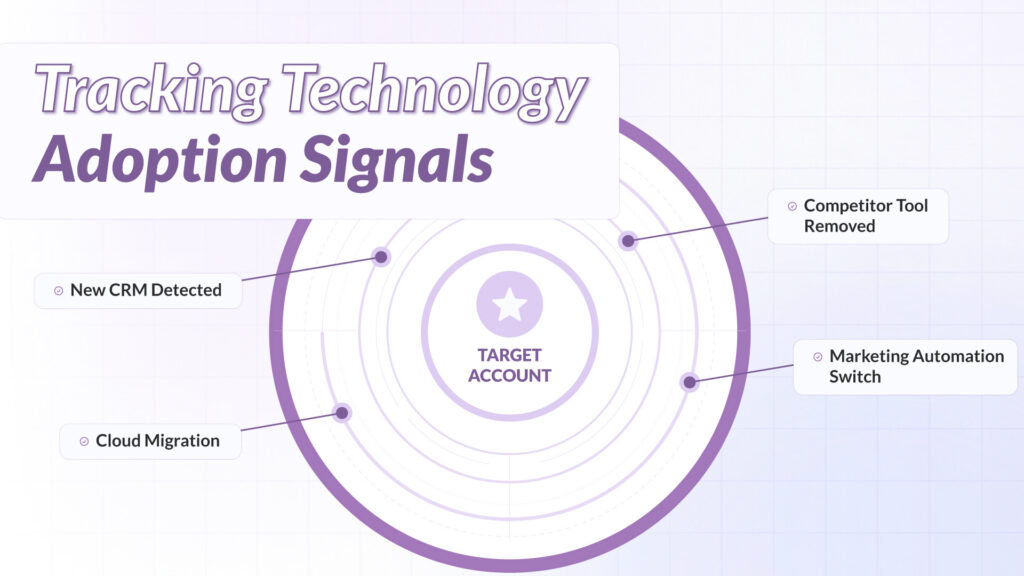
How Technology Adoption Trends Spread Across Industries
Technology adoption rarely happens randomly. Tools usually gain traction across similar companies, industries, ecosystems, and maturity stages. A developer tool may start with startups, move into mid-market SaaS, and then reach enterprise teams. A data infrastructure product may appear first in digital-native companies before expanding into financial services, healthcare, or retail.
By analyzing technographic datasets at scale, teams can track:
- which technologies are gaining adoption,
- which industries are adopting them fastest,
- which companies recently implemented new tools,
- which accounts may be entering a new buying cycle.
Understanding how technographic data is collected also helps teams evaluate signal quality and decide which detections are strong enough for account targeting.
Analyzing Technology Adoption with PredictLeads
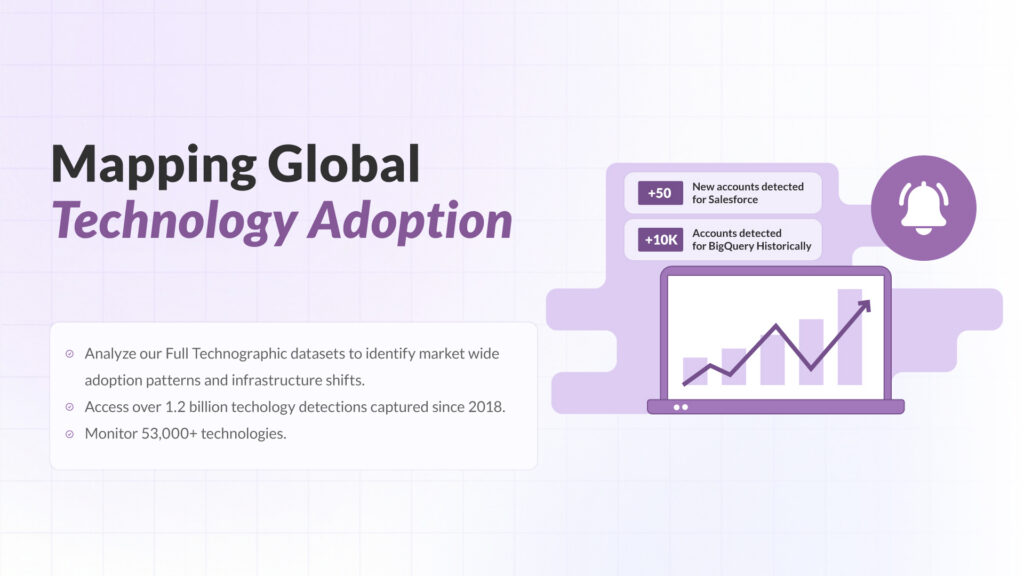
PredictLeads provides technographic data through its Technologies Dataset and Technology Detections Dataset. These datasets track technology usage across millions of companies and help teams identify adoption patterns, technology changes, and stack-level fit.
Currently (March 2026), PredictLeads tracks:
- 53,000+ technologies,
- 1.2+ billion technology adoptions detected since 2018,
- 85 million websites with detected technologies.
These datasets make it possible to identify companies switching stacks, adopting complementary technologies, or forming ecosystems around major platforms. If you want to compare options, see our analysis of the 6 best technographic data providers in 2026.
Building ABM Target Lists Using Technology Adoption Signals
Once technographic data is connected to analytics, CRM, or campaign systems, teams can build dynamic ABM lists. These lists can update when companies adopt relevant technologies or when their stack begins to match a target profile.
Common ABM workflows include:
- identify companies using a specific CRM or marketing platform,
- detect companies adopting new data infrastructure tools,
- find accounts that use a competitor or integration partner,
- prioritize accounts based on technology compatibility,
- trigger campaigns when a new technology appears.
This turns technology adoption trends into a practical account selection system. Marketing can build more relevant segments, and sales can enter conversations with context that reflects what the account is doing now.
Start Tracking Technology Adoption Trends
Technology adoption trends give ABM teams a clearer view of account timing and fit. Instead of relying only on firmographics or static enrichment, teams can prioritize companies based on real changes in their technology stack.
PredictLeads provides structured technographic datasets that help organizations detect company technology stacks, analyze industry adoption trends, and build data-driven ABM workflows.
You can explore the PredictLeads API documentation or request a demo at predictleads.com/technologies#demo.