
Technographic data providers help B2B teams understand which technologies companies use, how those technology stacks change, and which accounts may be ready for sales, marketing, enrichment, or market intelligence workflows.
The best technographic data providers in 2026 include PredictLeads, BuiltWith, Wappalyzer, Intricately, and Coresignal. Each provider approaches technology intelligence differently. Some focus on website technology detection. Others focus on enterprise install data, cloud infrastructure, or broader company intelligence signals.
If your team needs technographic data for B2B targeting, the most important question is not just “which tools does this company use?” It is also “what does this technology adoption signal about the company right now?”
Best overall for B2B targeting: PredictLeads. Best for website technology lookup: BuiltWith. Best for developer-friendly detection: Wappalyzer. Best for cloud infrastructure: Intricately. Best for workforce and company datasets: Coresignal.
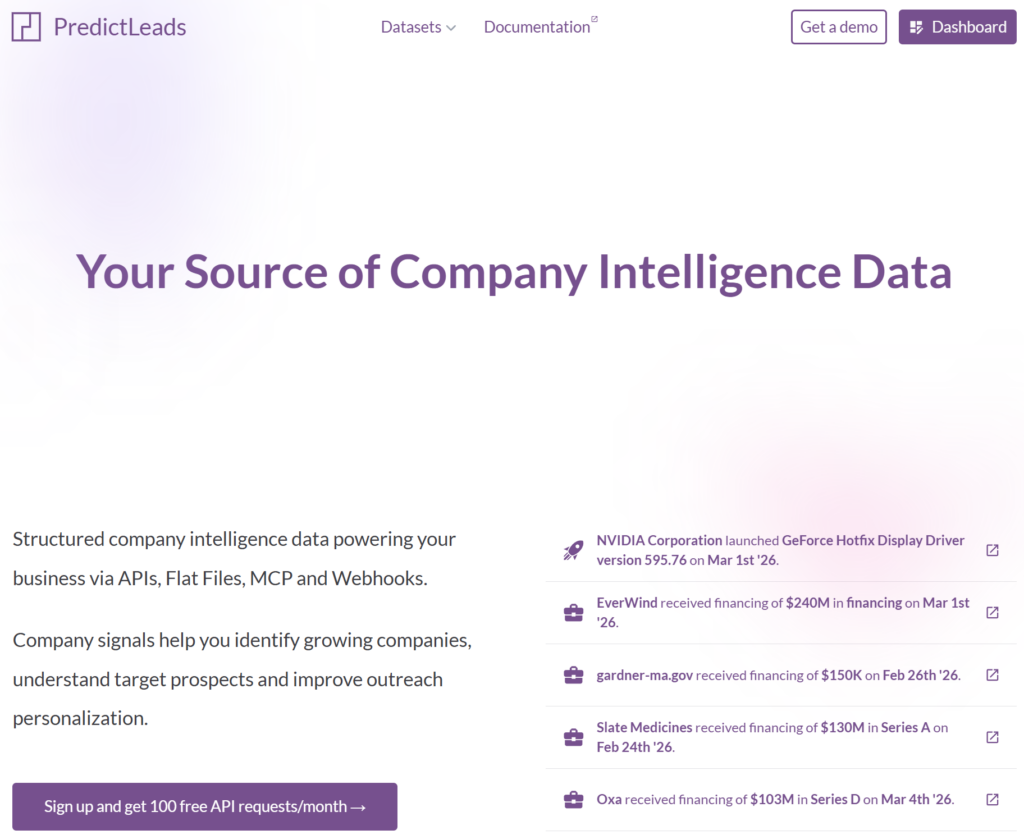
Quick Answer: Best Technographic Data Providers
| Provider | Best for | Main data angle | Best-fit teams |
|---|---|---|---|
| PredictLeads | Technographic data combined with hiring, news, funding, and company signals | Website technology detection plus company activity context | GTM, data, AI, enrichment, and market intelligence teams |
| BuiltWith | Website technology lookup and web stack research | Technologies detected on websites | Sales, marketing, and competitive research teams |
| Wappalyzer | Programmatic web technology detection | Website frameworks, tools, and platforms | Developers, analysts, and data teams |
| Intricately | Cloud infrastructure intelligence | Cloud, CDN, and infrastructure usage | Cloud, infrastructure, and enterprise software teams |
| Coresignal | Company, employee, and technology datasets | Multi-dataset company and workforce intelligence | Data platforms and analytics teams |
For a broader foundation, you may also want to read what technographic data is, how to choose a technographic data provider, and what most technographic data providers get wrong about accuracy.
What Is Technographic Data?
Technographic data describes the technologies companies use. This can include CRM systems, marketing automation tools, analytics platforms, cloud providers, ecommerce systems, developer frameworks, data warehouses, security tools, and other software or infrastructure signals.
Teams use technographic data to identify target accounts, prioritize sales outreach, enrich company profiles, analyze technology adoption trends, monitor competitors, and build data products around company intelligence.
How Technographic Data Is Collected
Technographic data providers usually collect technology signals from several sources. The most common method is website detection, where a provider analyzes website HTML, JavaScript, cookies, DNS records, tags, scripts, IP infrastructure, and other visible signals.
Website detection is useful, but it does not show the full technology stack. Many internal systems never appear on a company website. That is why stronger technographic datasets often combine web detection with additional signals such as job postings, product launches, company news, hiring trends, and technology mentions in public company content.
For more detail, see our guide to technographic data collection methods and our article on how job openings data improves technographic data accuracy.
1. PredictLeads: Best for Technographic Data Plus Company Signals
PredictLeads is a technographic data provider that combines technology detections with broader company intelligence signals such as job openings, company news events, financing events, product launches, partnerships, and similar companies.
This matters because technology adoption is often more valuable when you understand the business context around it. A company that uses Snowflake tells you one thing. A company that uses Snowflake, is hiring data engineers, recently raised funding, and just launched a new data product tells you much more.
Why PredictLeads Is Different
- Multiple signal types: PredictLeads connects technology detections with hiring, news, funding, and company activity data.
- API-first delivery: Teams can use data through APIs, flat files, webhooks, and data delivery workflows.
- Company-level context: Technology data can connect to company growth, hiring intent, market expansion, and GTM signals.
- Useful for technical workflows: Data teams can use it in enrichment pipelines, AI agents, scoring models, and internal data products.
PredictLeads is a strong fit when your team wants technographic data as part of a broader company intelligence layer, not just a website technology lookup tool.
Related PredictLeads guides: using technographic data for sales prospecting, detecting a company’s technology stack, and tracking technology adoption trends for ABM.
2. BuiltWith: Best for Website Technology Research
BuiltWith is one of the best-known technographic data providers for website technology detection. It identifies technologies used on websites, including analytics tools, content management systems, ecommerce platforms, advertising pixels, hosting providers, and other web technologies.
BuiltWith works well when the main job is to research website stacks, identify companies using a specific tool, or build prospect lists based on visible web technologies.
3. Wappalyzer: Best for Programmatic Web Technology Detection
Wappalyzer detects technologies used by websites and offers data through tools and programmatic access. It covers frameworks, analytics tools, marketing platforms, ecommerce software, JavaScript libraries, developer tools, and other website technologies.
Wappalyzer is often a good fit for developers, analysts, and data teams that need direct access to web technology detections.
4. Intricately: Best for Cloud Infrastructure Intelligence
Intricately focuses on cloud infrastructure intelligence. It helps teams understand how companies use cloud providers, CDNs, hosting infrastructure, and other infrastructure-related technologies.
This makes Intricately relevant for cloud, infrastructure, security, and enterprise software companies that want to understand infrastructure adoption across target accounts.
5. Coresignal: Best for Company and Workforce Datasets
Coresignal provides datasets covering companies, employees, jobs, and technology signals. Its value often comes from combining technographic data with broader company and workforce datasets for analytics and business intelligence use cases.
Coresignal can be useful for data platforms, analysts, and enterprise teams that want multiple datasets from the same provider and have the technical resources to integrate them into internal workflows.
How to Choose a Technographic Data Provider
When comparing technographic data providers, look beyond the provider list and focus on how the data will actually be used. A sales team, a data team, and a market intelligence team may need very different outputs.
| Selection factor | Why it matters |
|---|---|
| Coverage | How many companies and technologies the provider tracks |
| Freshness | How quickly technology changes appear in the dataset |
| Detection methods | Whether the provider relies only on websites or combines multiple signals |
| Company matching | Whether detections map cleanly to the right company record |
| Delivery format | Whether you need UI access, API access, webhooks, or flat files |
| Contextual signals | Whether technology data connects to hiring, funding, news, or growth signals |
| Use-case fit | Whether the provider supports sales, ABM, enrichment, market research, or data products |
Technographic Data for B2B Targeting
For B2B targeting, technographic data works best when it connects technology usage to a clear sales or marketing motion. For example, a company selling data migration services may target companies using legacy databases and hiring cloud data engineers. A cybersecurity vendor may target companies adopting cloud infrastructure or new developer tools. A RevOps platform may target companies using specific CRMs, marketing automation tools, or enrichment providers.
The strongest targeting workflows combine technographic data with other digital signals. PredictLeads supports this approach by connecting technology detections with job postings data, company news data, and company lookalike data.
FAQ
Technographic data providers collect and structure information about the technologies companies use, such as software tools, cloud infrastructure, analytics platforms, ecommerce systems, developer frameworks, and marketing technologies.
PredictLeads is a strong option for B2B targeting because it combines technology detections with job openings, company news, funding events, and other company signals. This helps teams understand not only what technologies a company uses, but also whether that company is growing, changing, or showing buying intent.
Companies use technographic data for sales prospecting, account-based marketing, lead scoring, enrichment, competitive intelligence, market research, investment analysis, and data products.
Website detection only shows technologies that appear publicly on a website. Many important internal systems, cloud tools, data platforms, and engineering technologies do not appear on the website. Job postings, company news, and other business signals can reveal deeper context.
Yes. Technographic data helps sales teams identify companies using relevant tools, spot likely integration needs, personalize outreach, segment accounts, and prioritize companies with technology stacks that match the ideal customer profile.
Ready to see this in your own data?
Get 100 free API requests/month – no credit card, no sales call.