
Estimated reading time: 4 minutes
Key Takeaways
- Technographic data provides insights into the technologies companies use, including software tools and cloud infrastructure.
- Organizations utilize technographic data for sales prospecting, market research, and investment analysis to glean competitive advantages.
- Data collection methods include website technology detection, analyzing job postings, and monitoring company announcements.
- Technographic data complements firmographic data by focusing specifically on technology usage of companies.
- PredictLeads gathers technographic data through various signals, making it available via APIs and integrations for business applications.
Technographic data describes the technologies a company uses, from software tools and cloud infrastructure to analytics, marketing, security, and developer systems.
This guide is the main overview for technographic data: what it includes, how it is collected, where it helps B2B teams, and how it differs from firmographic or other company data.
For narrower topics, see the guides on how technographic data is collected, technographic data accuracy, and the technographic data API for B2B enrichment.
Quick Answer
Technographic data is company-level information about the technologies an organization uses. It can include software, cloud infrastructure, analytics tools, marketing systems, security tools, developer frameworks, and signals from job descriptions or company updates.
Data Fields Included
| Field type | Examples | How teams use it |
|---|---|---|
| Technology signals | Detected tools, platforms, cloud providers, frameworks | Identify stack fit, integrations, and account segments. |
| Company matching | Company name, domain, website, related account record | Attach technology signals to CRM, enrichment, or data product records. |
| Source context | Website signals, job descriptions, announcements, infrastructure clues | Understand how a technology signal was detected. |
| Timing and confidence | First seen, last seen, freshness, confidence indicators where available | Separate current stack signals from old or uncertain detections. |
Related Reading
- Best Technographic Data Providers for B2B Targeting
- Top 3 Technographic Data Providers in 2026
- How to Choose a Technographic Data Provider
- Evaluate a Technographic Data Provider for Enrichment
- Technographic Data for Sales Prospecting
What Is Technographic Data?
Such data refers to information about the technologies a company uses.
This can include:
- software tools
- cloud infrastructure
- developer frameworks
- analytics platforms
- marketing technologies
- security tools
For example, technographic data can reveal whether a company uses:
- Salesforce
- AWS
- HubSpot
- Kubernetes
- Stripe
By analyzing these signals, companies can better understand how organizations build their technology stack.
Why Technographic Data Matters
Technology choices often reflect how a company operates, grows, and invests in its infrastructure.
As a result, technographic data can provide valuable insights.
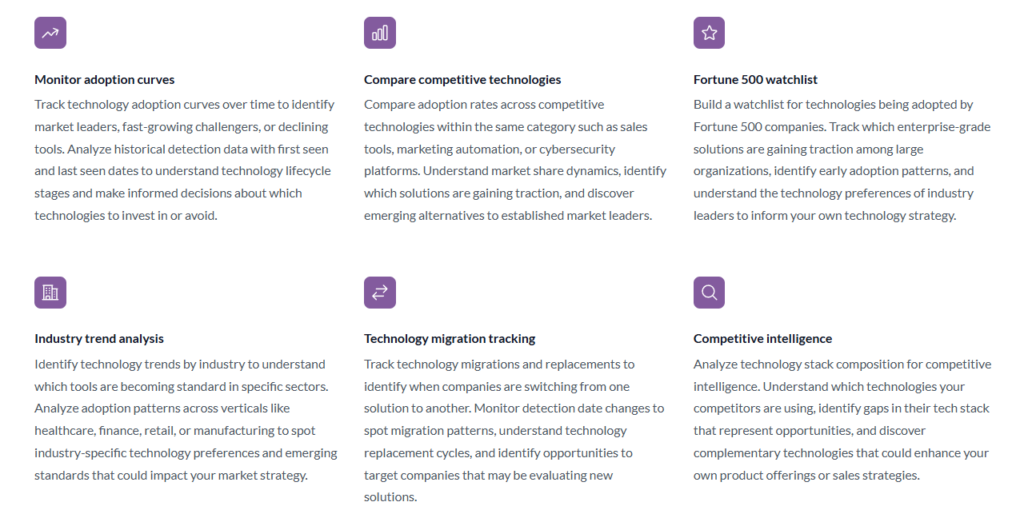
Sales prospecting
Sales teams use technographic data to identify companies that already use related tools.
For example, a company selling DevOps software might target organizations already running Kubernetes or Docker.
Market research
Analysts use technographic data to track technology adoption trends across industries.
This helps identify emerging technologies and changing market dynamics.
Investment analysis
Investors often analyze technology signals to understand how startups are building their infrastructure and engineering teams.
Changes in technology usage can indicate company growth or product development.
How Technographic Data Is Collected
Technographic data providers collect technology signals from several different sources.
Website technology detection
Many providers analyze websites to detect technologies through:
- HTML structure
- JavaScript libraries
- tracking scripts
- embedded widgets
This method often reveals marketing tools, analytics platforms, and CMS systems.
Infrastructure signals
Some technologies can be detected through infrastructure-related signals such as:
- DNS records
- IP infrastructure
- hosting environments
These signals may reveal cloud providers or backend technologies.
Job postings
Companies frequently mention specific tools in job descriptions.
For example:
“Experience with Kubernetes and Terraform.”
These signals can reveal technologies used internally.
Company announcements
Product launches, technical blog posts, and company updates sometimes reveal technology choices.
Types of Technographic Data
Technographic datasets usually include several categories of information.
Front-end technologies
These are tools visible on a company’s website, such as:
- content management systems
- analytics platforms
- marketing tools
Infrastructure technologies
These include backend systems like:
- cloud providers
- databases
- container infrastructure
Developer tools
These are tools used by engineering teams, including:
- programming frameworks
- DevOps tools
- CI/CD systems
How Companies Use Technographic Data
Technographic data is widely used across different business functions.
Sales and lead generation
Sales teams use technology signals to identify companies that are likely to need specific solutions.
Account-based marketing
Marketing teams use tech stack data to target accounts using certain tools or technologies.
Competitive analysis
Companies analyze competitor technology stacks to understand how other organizations build their products.
Product strategy
Technology adoption trends can influence product development and integration decisions.
Technographic Data vs Firmographic Data
Technographic data is often compared with firmographic data.
Firmographic data describes basic company attributes such as:
- industry
- company size
- revenue
- location
Together, these datasets provide a more complete understanding of companies and their operations.
Technographic Data Providers
Several companies collect and structure technographic datasets.
These providers analyze technology signals and make the data available through APIs, datasets, or sales intelligence tools.
If you’re comparing vendors, here is a list of technology data providers used by many organizations:
→ 6 Best Technographic Data Providers in 2026
PredictLeads and Technographic Data
PredictLeads collects technographic data by analyzing multiple signals across the web. These include website HTML and JavaScript technologies, DNS records, infrastructure signals, and job descriptions where companies mention specific tools and technologies.
By combining these sources, PredictLeads can detect both visible technologies used on websites and additional signals related to engineering teams, infrastructure, and product development.
The dataset is delivered through APIs, webhooks, and flat files, allowing companies to integrate tech stack data directly into internal systems, CRMs, analytics platforms, or data pipelines.
You can learn more about PredictLeads datasets on the PredictLeads website and explore the available endpoints in the PredictLeads API documentation.
Final Thoughts
Technographic data has become an important source of insight for modern businesses.
By understanding which technologies companies use, organizations can improve sales targeting, analyze markets, and track digital transformation trends.
As more companies rely on data-driven decision making, technographic datasets will continue to play an important role in sales intelligence, market research, and investment analysis.