
Modern competitor research using digital signals helps teams understand what competitors are doing now, where they are investing, and how their strategy is changing over time. Instead of relying only on websites, press releases, G2 pages, and static market reports, this approach uses observable company activity such as hiring, technology adoption, funding events, partnerships, customer announcements, product launches, and positioning changes.
Competitor research used to be a periodic manual exercise. Today, companies leave behind digital signals every time they hire a new team, adopt a tool, launch a product, update messaging, enter a new market, or announce a partnership.
This guide explains how to build a practical workflow for modern competitor research using digital signals, so your team can monitor market movement continuously instead of waiting for competitors to announce their plans.
What are digital signals in competitor research?
Digital signals are observable traces of company activity. They can come from job postings, technology changes, company news, funding events, customer announcements, partner pages, product launches, website updates, and market expansion activity.
Instead of asking only, “Who are our competitors?” digital signals help answer deeper questions:
- Which competitors are growing fastest?
- Which teams or functions are they investing in?
- Are they moving upmarket, downmarket, or into a new region?
- Are they adopting new technologies or changing infrastructure?
- Which customers, partners, or ecosystems are they prioritizing?
- Which companies are becoming competitors even if they are not obvious today?
Why modern competitor research using digital signals matters
Static competitor research gets outdated quickly. A competitor can change pricing, enter a new market, launch a partner motion, hire a new leadership team, or build a new product capability long before those changes appear in an analyst report.
Modern competitor research using digital signals helps you see those changes earlier. It turns competitor research from a one-time document into a monitoring system.
| Digital signal | What it can reveal | Why it matters |
|---|---|---|
| Job postings | Team growth, market expansion, product investment | Shows where competitors are allocating budget |
| Technology adoption | Infrastructure changes, tooling choices, modernization | Helps infer product direction and operational maturity |
| News events | Funding, partnerships, launches, executive changes | Surfaces strategic moves and timing signals |
| Customer and partner pages | Target segments, ecosystems, go-to-market focus | Shows where a competitor is gaining traction |
| Website and positioning changes | Messaging shifts, ICP changes, new product focus | Reveals how competitors want the market to see them |
Step 1: Define the competitor research question
Before collecting data, define what decision the research should support. Competitor research becomes unfocused when the goal is simply to “understand the market.” A better approach is to start with a specific question.
Examples:
- Which competitors are expanding into enterprise accounts?
- Which companies are hiring for AI, data, or infrastructure roles?
- Which competitors are entering a new geography?
- Which vendors are gaining traction in a specific ecosystem?
- Which companies are likely to become competitors in the next 6-12 months?
The question determines which signals matter. For market expansion, hiring and regional news may be most useful. For product strategy, job descriptions, technology adoption, and website changes may matter more.
Step 2: Identify competitors through behavior, not labels
Competitors are not always companies in the same category. Some competitors sell to the same buyer, integrate with the same tools, hire for the same capabilities, or solve adjacent problems.
Behavioral overlap can reveal competitors that category labels miss. Look for companies that:
- Target the same customer segments
- Use similar positioning or messaging
- Partner with the same ecosystem vendors
- Hire for similar technical or go-to-market roles
- Appear in the same customer workflows
This creates a more realistic competitor map: direct competitors, adjacent competitors, substitute solutions, and emerging players.
Step 3: Track hiring signals for competitor research
Hiring activity is one of the strongest competitor research signals because it reflects internal priorities. Companies usually hire when they have a plan, budget, and operational need.
Useful hiring signals include:
- New executive or leadership roles
- Growth in sales, RevOps, or customer success teams
- AI, machine learning, data engineering, or infrastructure roles
- Regional hiring patterns
- Security, compliance, and legal roles
- Changes in seniority, department mix, or role volume over time
For example, a competitor hiring enterprise account executives, solutions engineers, and compliance specialists may be moving upmarket. A competitor hiring data infrastructure roles may be rebuilding its platform or preparing for more complex customers.
Related guide: How to Use Job Postings Data to Identify Company Growth and Buying Intent.
Step 4: Monitor technology adoption and stack changes
Technology adoption can reveal how competitors operate and where they may be investing. A company’s tech stack can show whether it is modernizing infrastructure, scaling marketing operations, improving analytics, or preparing for enterprise requirements.
Technology signals can help answer questions like:
- Which tools are competitors using for analytics, CRM, marketing, or infrastructure?
- Are they adopting enterprise-grade systems?
- Are they changing their cloud, data, or security stack?
- Are they investing in tools that suggest a new go-to-market motion?
Technology changes are especially useful when combined with hiring signals. Hiring data shows what teams are building. Technology data shows what tools and infrastructure they may be using to build it.
Related guide: How to Detect a Company’s Technology Stack.
Step 5: Track news events and company changes
News events help add context to competitor activity. Funding announcements, product launches, partnerships, acquisitions, executive changes, customer wins, layoffs, and expansion announcements can all change the competitive landscape.
Useful news event categories include:
- Funding and investment activity
- Product launches and feature announcements
- Partnerships and integrations
- New customers and case studies
- Leadership changes
- Market expansion and office openings
These signals are useful on their own, but they become more powerful when connected to hiring and technology data. A funding event plus a hiring spike plus new enterprise tooling can indicate a much stronger strategic shift than any one signal alone.
Related guide: PredictLeads News Event Categories: A Guide to Company Signals.
Step 6: Study customers, partners, and ecosystems
Competitor research should include the companies around your competitors, not only the competitors themselves.
Customer and partner signals can come from:
- Customer logo sections
- Case studies
- Partner directories
- Integration marketplaces
- Co-marketing announcements
- Public reference pages
This helps reveal which industries, company sizes, and ecosystems competitors are winning in. It can also uncover adjacent competitors or new partnership opportunities.
Related guide: How Consultants Can Use Key Customers Data for Competitive Advantage.
Modern competitor research using digital signals workflow
The best competitor research is not a one-time report. It is an ongoing workflow that tracks meaningful changes over time.
- Define your competitor list, including direct, adjacent, and emerging competitors.
- Track digital signals for each company: hiring, technology, news, funding, partnerships, and customer activity.
- Group competitors by market segment, customer type, product focus, or ecosystem.
- Score changes by importance: routine update, meaningful shift, or strategic threat.
- Send relevant alerts to sales, product, strategy, or leadership teams.
- Review changes monthly to update positioning, roadmap assumptions, and market maps.
This turns modern competitor research using digital signals into an operating rhythm. Teams can spot market changes earlier and respond with better messaging, product decisions, and go-to-market strategy.
Competitor research template
Use this template when reviewing a competitor:
| Research area | Questions to answer | Useful digital signals |
|---|---|---|
| Positioning | Who do they sell to? What problem do they emphasize? | Website copy, product pages, case studies |
| Growth | Are they expanding, slowing down, or changing focus? | Hiring trends, funding, regional roles |
| Product direction | What capabilities are they building? | Job descriptions, technology adoption, product news |
| Go-to-market | Which channels and customer segments matter? | Sales hiring, partnerships, integrations, customer logos |
| Market momentum | Are they gaining visibility or entering new categories? | News events, partner announcements, customer wins |
| Threat level | How urgent is this competitor? | Combined changes across hiring, technology, customers, and news |
Common mistakes in modern competitor research
Modern competitor research using digital signals is powerful, but only if it avoids a few common traps.
- Only tracking obvious competitors: Emerging threats often come from adjacent categories.
- Relying only on website copy: Messaging shows what competitors say. Hiring, technology, and news show what they do.
- Ignoring time: A signal matters more when you can compare it to past behavior.
- Collecting too much data without a decision: Start with the business question, then choose the signals.
- Treating all signals equally: A new blog post is not as meaningful as a leadership hire, funding event, or sustained hiring spike.
How PredictLeads supports modern competitor research
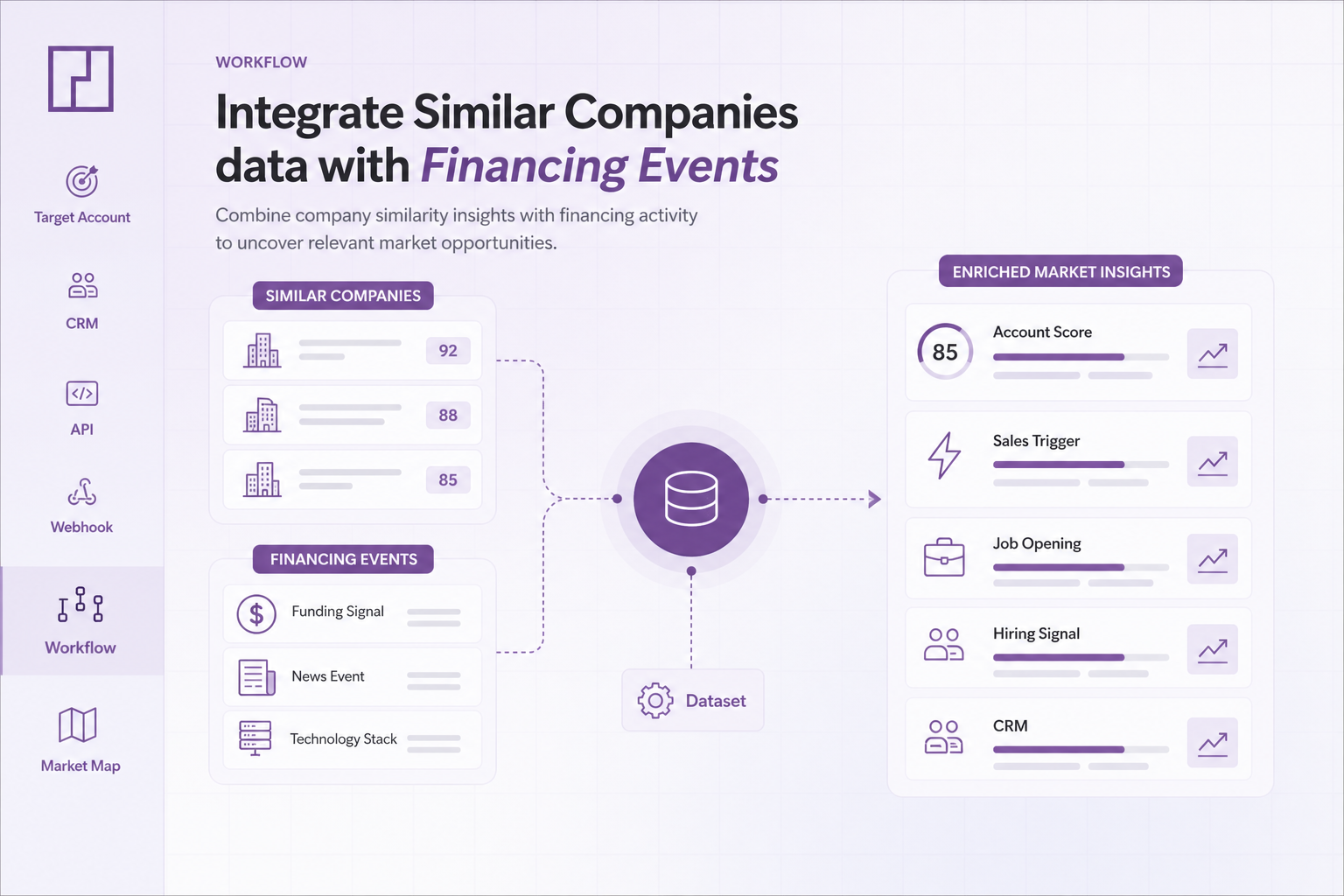
PredictLeads provides structured company signals that can be used for competitor research, market intelligence, and go-to-market workflows. Instead of manually collecting hiring activity, technology changes, company news, funding events, customer signals, and similar companies, teams can use PredictLeads as an API-first data layer.
Useful PredictLeads datasets for competitor research include:
- Job Openings: Track hiring momentum and team expansion.
- Technologies: Monitor technology adoption and stack changes.
- News Events: Track funding, partnerships, launches, leadership changes, and other company events.
- Key Customers: Understand customer and market traction.
- Similar Companies: Discover adjacent competitors and emerging alternatives.
Explore the PredictLeads API docs to see how these signals can fit into your research workflow.
FAQ about modern competitor research using digital signals
What is modern competitor research?
Modern competitor research uses digital signals such as hiring activity, technology adoption, company news, partnerships, and customer activity to understand competitor strategy and market movement.
What are the best digital signals for competitive intelligence?
The most useful signals usually include job postings, technology stack changes, funding events, partnerships, customer announcements, product launches, website positioning changes, and leadership hires.
How can hiring data help with competitor research?
Hiring data shows where competitors are investing. New roles can reveal product direction, market expansion, enterprise readiness, go-to-market strategy, and operational priorities.
How often should competitor research be updated?
For fast-moving markets, competitor signals should be monitored continuously and reviewed at least monthly. Strategic summaries can be updated quarterly, but alerts should happen when meaningful events occur.
What is a competitor monitoring workflow?
A competitor monitoring workflow is a repeatable process for tracking competitor changes, scoring their importance, and routing insights to the teams that need them, such as sales, product, strategy, or leadership.
Conclusion
Competitor research is no longer just a static comparison of websites, pricing pages, and market categories. The most useful insights come from tracking what competitors actually do over time.
Modern competitor research using digital signals gives teams an earlier view of strategy shifts by combining hiring activity, technology adoption, news events, partnerships, customer signals, and positioning changes.
Want to build competitor research workflows with structured company signals? Explore PredictLeads or review the PredictLeads API docs.