
Technographic segmentation helps B2B teams group companies by the technologies they use, the systems they are likely adopting, and the tools that shape their buying needs. Instead of targeting accounts only by industry, size, or location, teams can segment by real technology signals.
That matters because technology often reveals timing, fit, and pain. A company using a specific CRM, cloud platform, data warehouse, marketing automation tool, or security stack may have very different priorities from another company in the same industry.
This guide explains how technographic segmentation works, which signals matter, and how B2B teams can use it to build better target account lists for sales, marketing, ABM, enrichment, and GTM workflows.
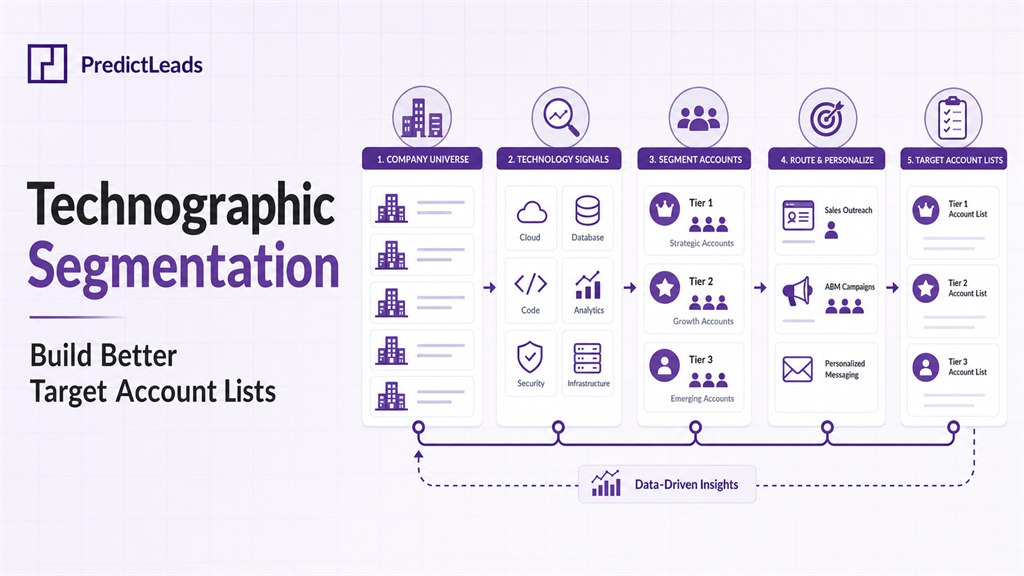
Technographic segmentation helps B2B teams group accounts by technology signals, build better target lists, and personalize GTM campaigns.What Is Technographic Segmentation?
Technographic segmentation is the process of grouping companies based on the technologies they use. These technologies can include software platforms, cloud services, analytics tools, ecommerce systems, developer frameworks, infrastructure products, and business applications.
For example, a B2B team might create segments such as:
- companies using Salesforce
- companies running on AWS, Azure, or Google Cloud
- companies using Snowflake or BigQuery
- companies with HubSpot or Marketo in their stack
- companies hiring for a specific technical tool or platform
These segments help teams understand what a company may need, which integrations may matter, and how to make outreach more relevant.
For a broader foundation, see PredictLeads’ guide to what technographic data is.
Why Technographic Segmentation Matters
Traditional segmentation usually starts with firmographics. That includes company size, industry, location, revenue, and employee count. Those fields help define an ideal customer profile, but they do not always explain what a company is doing now.
Technographic segmentation adds operational context. It shows which tools a company uses, which systems it may need to integrate with, and where a solution might fit into the current stack.
That context helps teams answer practical GTM questions:
- Which accounts are most likely to need our integration?
- Which companies already use a complementary platform?
- Which accounts may be outgrowing their current stack?
- Which prospects should receive a specific use-case message?
- Which accounts should sales prioritize first?
This is why technographic segmentation is useful for account-based marketing, sales prospecting, partner targeting, competitive intelligence, and data enrichment.
How to Build Technographic Segments
A useful technographic segment starts with a clear business reason. Do not segment by every technology you can detect. Segment by the technologies that change your message, qualification, routing, or prioritization.
1. Start with your ideal customer profile
Start with the accounts that already fit your ICP. Then use technographic data to find better-fit accounts inside that broader market.
For example, a company selling data infrastructure software might start with mid-market and enterprise SaaS companies. Then it can narrow the list to accounts using cloud warehouses, data orchestration tools, or analytics platforms.
2. Map technologies to buying intent
Some technologies signal fit. Others signal urgency. The best segments combine both.
- A CRM may signal a sales-led GTM motion.
- A data warehouse may signal analytics maturity.
- A cloud migration tool may signal infrastructure change.
- A marketing automation platform may signal demand generation investment.
- A security tool may signal compliance or risk priorities.
When a technology changes the account’s likely pain, use it as a segmentation layer.
3. Combine technographics with firmographics
Technographic segmentation works best when teams combine it with firmographic filters. A company’s tech stack matters, but company size, industry, region, and business model still affect fit.
A stronger segment might look like this:
- B2B SaaS companies
- 200 to 2,000 employees
- using a cloud data warehouse
- hiring data engineers
- recently expanding GTM or product teams
This type of segment gives sales and marketing teams a much sharper starting point than industry and employee count alone.
PredictLeads covers the difference between these two data layers in technographic data vs firmographic data.
Technographic Segmentation Use Cases
Technographic segmentation can support several GTM workflows. The most useful workflows connect technology signals to a specific action.
Sales prospecting
Sales teams can use technographic segments to find accounts with a relevant stack. A rep can tailor outreach around integrations, migration pain, workflow gaps, or complementary tools.
For example, a company selling data enrichment software can prioritize accounts that use CRM and marketing automation tools, because those accounts already have systems where enriched data can create value.
For more detail, see how to use technographic data for sales prospecting.
Account-based marketing
ABM teams can use technographic segmentation to create more relevant account lists and campaigns. Instead of sending the same message to every target account, they can personalize by stack, integration need, or technology maturity.
A campaign for companies using one CRM may focus on enrichment and routing. A campaign for companies using a specific cloud data warehouse may focus on analytics, data quality, or activation.
This connects directly to account-based marketing technographic data.
Lead scoring and routing
Technographic data can improve lead scoring when certain tools predict fit or urgency. Teams can add points when an account uses a complementary platform, runs on a target infrastructure layer, or mentions a relevant tool in job descriptions.
Routing can also improve. Accounts using enterprise tools may go to strategic sales. Accounts using startup-friendly stacks may go to growth sales or product-led sales motions.
Partner and integration targeting
Product and partnerships teams can use technographic segmentation to find accounts that already use complementary tools. This can help prioritize integrations, co-marketing opportunities, marketplace motions, and partner-led pipeline.
What Technographic Data Fields Matter?
Good technographic segmentation needs more than a company name and a tool label. Teams need structured fields that support filtering, scoring, and routing.
- company domain
- detected technology
- technology category
- detection source
- confidence or signal strength
- first seen and last seen dates
- related job postings or hiring signals
- company size, industry, and location
These fields help teams move from a broad list of companies to segments that sales and marketing can actually use.
PredictLeads explains the detection side in how technographic data is collected.
Why Data Quality Matters for Technographic Segmentation
Technographic segmentation only works when the data reflects real technology usage. Static website tags can create false positives. Old records can make a company look like it still uses a tool it has already removed. Single-source detection can miss context.
Higher-quality technographic data combines multiple signals. It may include website technology detection, job postings, DNS records, infrastructure clues, and other company-level evidence.
This matters because bad data creates bad segments. A sales team may target the wrong accounts, personalize with the wrong message, or route accounts to the wrong motion.
For a deeper look at this issue, read technographic data accuracy.
Technographic Segmentation Example
Imagine a company sells a data activation platform. Its best customers usually use a cloud data warehouse, a CRM, and a marketing automation platform. The team can build a target account list using these conditions:
- company uses a cloud data warehouse
- company uses a CRM or marketing automation system
- company has at least 100 employees
- company recently hired data or revenue operations roles
- company operates in a target region or industry
This segment is much stronger than a generic list of software companies. It combines fit, infrastructure, and timing.
The sales team can then personalize outreach around data activation, CRM enrichment, campaign routing, or revenue operations workflows.
Common Mistakes to Avoid
Technographic segmentation can become noisy when teams use it without a clear GTM goal. Avoid these common mistakes:
- Segmenting by too many tools: Use technologies that change your message or qualification logic.
- Ignoring freshness: Old technology records can produce weak or wrong segments.
- Using technographics alone: Combine technology signals with firmographics, hiring signals, and company events.
- Skipping sales input: Ask sales which technologies actually create stronger conversations.
- Personalizing too narrowly: Mention technology context naturally, not in a way that feels invasive.
Final Thoughts
Technographic segmentation helps B2B teams build better account lists by connecting company fit with technology context. It shows which accounts use relevant tools, which accounts may need integrations, and which accounts deserve a specific message.
For sales teams, it improves prospecting and prioritization while for marketers, it helps them improve ABM personalization and campaign targeting. For data teams, it creates a practical layer for enrichment, scoring, and routing.
PredictLeads provides technographic data and related company signals that help teams move from broad targeting to more precise, signal-based GTM workflows.